Natural Pathways to Daily Energy & Vitality
Understanding the role of micronutrients, adaptogens, and lifestyle factors in supporting men's wellness and daily energy levels

Educational content only. No promises of outcomes.
This resource explains the role of natural nutrients and lifestyle factors. It is not personalized medical advice.
Key Factors Supporting Daily Energy
Male energy and vitality are influenced by multiple interconnected factors. Understanding these elements provides context for everyday wellness decisions:
- Nutritional foundation: The availability of essential vitamins, minerals, and amino acids supports basic metabolic energy production
- Restorative sleep: Quality sleep enables hormonal balance and cellular repair necessary for daytime vitality
- Regular movement: Physical activity stimulates energy systems and supports cardiovascular and muscular health
- Stress management: Chronic stress depletes reserves; recovery practices help sustain resilience
- Hydration & timing: Water intake and meal timing directly affect energy availability throughout the day
- Micronutrient balance: Specific minerals and vitamins function as cofactors in energy metabolism
Essential Micronutrients & Their Roles
Certain vitamins and minerals play specific roles in energy metabolism and recovery. Below is an overview of commonly researched micronutrients and their natural dietary sources:
| Micronutrient | Role in Energy & Metabolism | Natural Food Sources |
|---|---|---|
| B Vitamins (B1, B2, B3, B6, B12) | Essential cofactors in energy production and nervous system function | Whole grains, meat, eggs, legumes, leafy greens, mushrooms |
| Vitamin D3 | Supports calcium absorption, immune function, and mood regulation | Sunlight exposure, fatty fish, egg yolks, mushrooms |
| Zinc | Critical for enzyme function, immunity, and cellular recovery | Oysters, beef, pumpkin seeds, chickpeas, cashews |
| Selenium | Antioxidant protection and thyroid function support | Brazil nuts, tuna, halibut, turkey, eggs |
| Coenzyme Q10 | Supports cellular energy production in mitochondria | Fatty fish, organ meats, peanuts, sesame seeds |
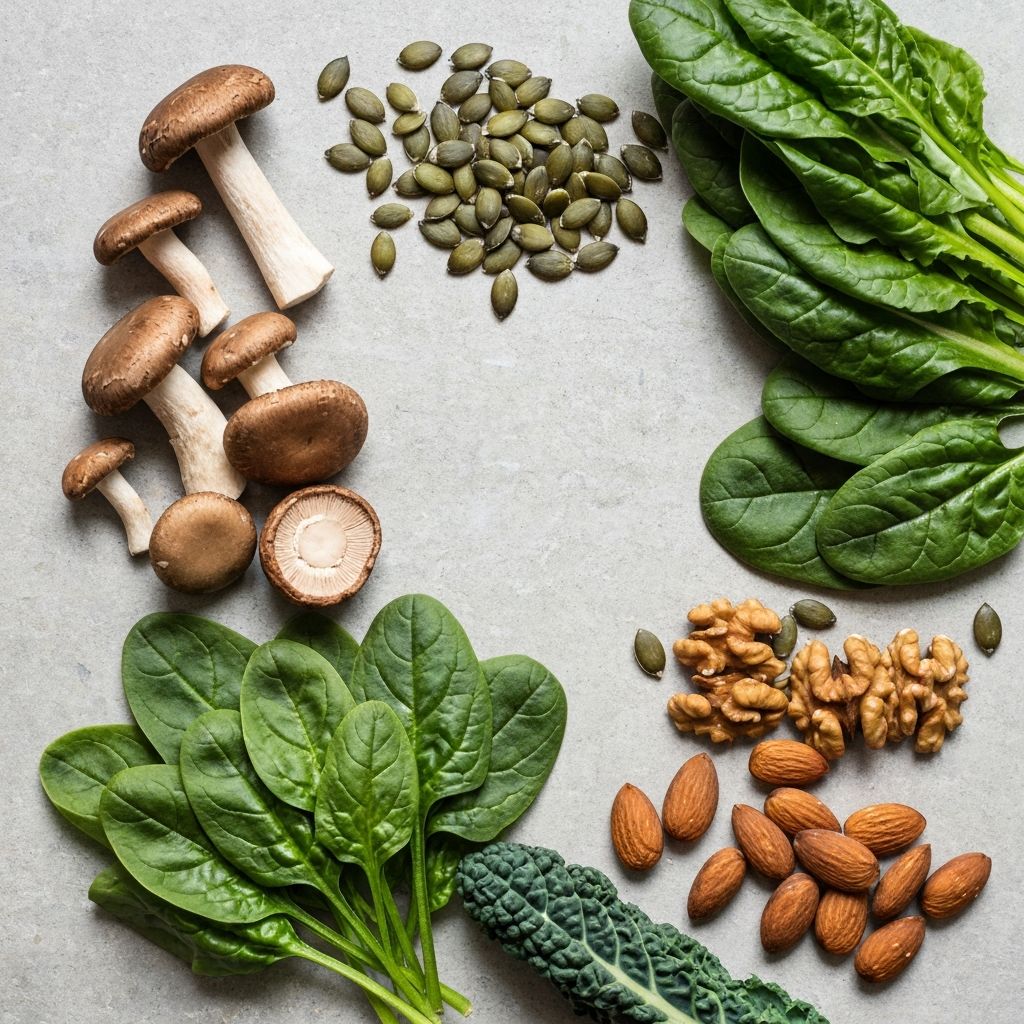
| Magnesium | Involved in 300+ enzyme reactions, muscle function, and relaxation | Pumpkin seeds, almonds, spinach, dark chocolate, avocado |
Micronutrient Density
The body cannot synthesize these nutrients; they must come from diet or supplementation. A varied diet of whole foods typically provides adequate amounts. Individual needs vary based on activity level, age, and health status.
The Role of Restorative Sleep & Recovery
Sleep is not passive rest—it is an active process critical for energy restoration. During sleep, the body undergoes:
- Cellular repair and regeneration
- Hormone regulation (testosterone, cortisol, growth hormone)
- Consolidation of neural pathways and memory
- Restoration of glycogen stores in muscles
Adults typically require 7-9 hours per night. Chronic sleep deprivation impairs metabolic function, immune response, and daily energy levels.

Simple Daily Practices for Consistency
Small, repeatable habits compound over time. Consider these evidence-informed practices:
- Morning light exposure: 10-30 minutes of natural sunlight within an hour of waking helps regulate circadian rhythm and supports alertness
- Regular meal timing: Consistent meal schedule supports stable energy and hormone regulation throughout the day
- Hydration baseline: Drinking water consistently (roughly half your body weight in ounces) supports cognitive and physical performance
- Movement breaks: 5-10 minute activity breaks every 2-3 hours sustain energy and focus
- Evening wind-down: 30-60 minutes before bed with reduced screen time and dim lighting prepares the body for sleep
- Stress recovery: Brief breathing or meditation practices (5-10 minutes daily) help regulate the nervous system
- Weekend recovery: Slightly reduced activity or structured rest days allow full physical recovery
Basic Mobility & Movement
Functional movement supports circulation, joint health, and sustained energy. No equipment or gym membership is required. These movements can be performed daily:
- Arm circles: 10 forward, 10 backward—supports shoulder mobility
- Leg swings: 10 each direction per leg—activates hip flexibility
- Bodyweight squats: 10-15 reps—engages major muscle groups and circulation
- Cat-cow stretch: 10 repetitions—mobilizes spine and core
- Walking lunges: 10 per leg—strengthens legs and improves balance

Balanced Nutrition Structure
A balanced plate typically includes:
- Protein source (¼ plate): Meat, fish, eggs, legumes, or dairy—supports muscle maintenance and satiety
- Complex carbohydrates (¼ plate): Whole grains, sweet potatoes, oats—sustains energy
- Vegetables (½ plate): Variety of colors provides micronutrients and fiber
- Healthy fat component: Olive oil, avocado, nuts—supports hormone function and nutrient absorption
Individual macronutrient ratios vary based on activity level and personal metabolism. Consistency matters more than perfection.

Traditionally Used Plant Supporters
Certain plant extracts have been studied in traditional medicine and modern research for their potential to support energy and recovery:

Rhodiola Rosea
Traditional use: Considered an adaptogenic herb in Eastern European and Asian medicine for centuries.
Studied properties: May support mental clarity, stress resilience, and physical endurance during periods of fatigue.
How it works: Thought to influence neurotransmitter activity and stress hormone regulation.

Eleuthero (Siberian Ginseng)
Traditional use: Used in traditional Asian and Russian medicine to support stamina and recovery.
Studied properties: May enhance physical endurance and support immune function during stress or fatigue.
How it works: Contains compounds that may support the body's adaptation to physical and mental demands.
Cordyceps Mushroom
Traditional use: Valued in Traditional Chinese Medicine for over 300 years for vitality support.
Studied properties: May support ATP production (cellular energy) and oxygen utilization during physical activity.
How it works: Contains bioactive compounds that may enhance energy at the cellular level.
Hydration & Meal Timing
Water is essential for every metabolic process. Dehydration—even mild—impairs cognitive function, energy production, and physical performance.
Hydration Guidelines
Basic approach: Drink when thirsty and monitor urine color. Pale yellow typically indicates adequate hydration; dark yellow suggests dehydration.
Activity adjustment: During or after exercise, increase intake proportionally.
Timing impact: Drinking water with meals aids digestion; between meals maintains cellular hydration.
Meal Timing Effects
Energy distribution: Eating every 3-4 hours maintains stable blood sugar and prevents energy crashes.
Pre-activity fueling: A light carbohydrate source 30-60 minutes before exercise provides accessible energy.
Post-activity recovery: Protein and carbohydrates within 30-60 minutes after activity support muscle recovery.

Common Misconceptions vs. Evidence
| Common Claim | Evidence-Based Context |
|---|---|
| "Energy pills provide instant energy" | Energy is produced by complex metabolic processes. Stimulants may increase alertness temporarily but do not create sustainable energy without proper sleep and nutrition. |
| "Supplements can replace diet" | Supplements complement a balanced diet but cannot fully replicate the nutrient diversity and food matrix of whole foods. |
| "One supplement solves everything" | Energy and wellness depend on multiple interconnected factors: sleep, nutrition, movement, stress management, and consistent habits. |
| "More is always better" | Excess supplementation can be ineffective or potentially harmful. Recommended intakes are based on actual physiological needs. |
| "Results appear within days" | Sustainable improvements in energy typically require weeks to months of consistent practices. Cellular adaptation and habit formation take time. |
| "Natural always means safe" | Natural does not guarantee safety. Potency, purity, and individual sensitivities matter. Consult healthcare providers about any supplement. |
Context of Supporting Research
This information draws from peer-reviewed research published in journals such as Journal of the International Society of Sports Nutrition, Nutrients, Phytotherapy Research, and The American Journal of Clinical Nutrition.
Research contexts include:
- Micronutrient deficiency and energy metabolism studies
- Sleep architecture and recovery processes
- Adaptogenic plant compounds and stress response
- Hydration and cognitive/physical performance
- Circadian rhythm and light exposure effects
Limitation note: Most studies involve specific populations under controlled conditions. Individual results in real-world settings vary based on genetics, lifestyle, health status, and consistency.
Important Limitations & Context
This is Educational Content Only
No Personalized Medical Advice: This resource provides general information about nutrients and lifestyle factors. It is not personalized health advice and does not replace consultation with a qualified healthcare provider.
Individual Variation: Response to any intervention varies significantly based on genetics, current health status, medications, age, activity level, and many other factors.
No Promised Outcomes: This website does not promise or guarantee specific results. Sustainable wellness comes from consistent, long-term practices.
Consult Healthcare Providers: Before making significant dietary or supplement changes, especially if you have existing health conditions or take medications, consult your doctor or registered dietitian.
Supplement Quality: If choosing to use supplements, select products from reputable manufacturers that undergo third-party testing.